FORYOU is a journal of technology, world affairs, and Bali: essays on the systems people build, the events that shape the day, and the island behind the postcard.
A small room, a long table, and more paper than strictly necessary.
00
Essays
00
Contributors
00
Fields
00
Newsletter
FORYOU publishes work that takes the long way around.
The most interesting things rarely arrive as a trend. They arrive as a detail that will not leave you alone: a door handle, a loading state, a sentence you keep returning to. FORYOU exists to give those details a place to become an argument.
FORYOU is not interested in pretending the pace of the internet is inevitable. It is interested in making a small, durable thing inside it — something you can read once, argue with, and come back to when the world has changed its mind.
Not a startup story. A record of a few decisions that made the journal feel like itself.
Beginning
A folder and a name
FORYOU began as a folder of notes about software, buildings, and the places where the two meet. The aim was to give those notes somewhere to become arguments.
First essays
The first essays
The first essays joined the archive without a launch campaign or a growth plan. The hope was simple: that someone would read one slowly and come back.
A slower rhythm
Publishing when ready
The journal stopped trying to fill a calendar. New work is published when an idea is ready, with enough time to make the argument clear and leave room for the reader to think.
Three series
Three regular series
The Stack, Rank One Daily, and Bali Dispatch became regular series. The Overprint became a monthly newsletter that ties them together.
Working principles
Four working principles. Not a manifesto, exactly — more like a set of tools kept close at hand.
01
Pay attention, then pay again.
The first look gives you the obvious answer. The second look is where the work starts. FORYOU is interested in what survives a longer stare.
02
Make the default visible.
Every system, interface, and routine has a point of view baked into it. The work is to name the assumptions rather than decorate them.
03
Prefer the specific.
A good detail is worth more than a grand thesis. The journal would rather describe one stubborn button than announce the future of technology.
04
Leave room for the reader.
An essay should not do all the thinking. The aim is to be clear enough to trust and open enough to argue with.
The owner
The person who keeps the lights on and the edits honest.
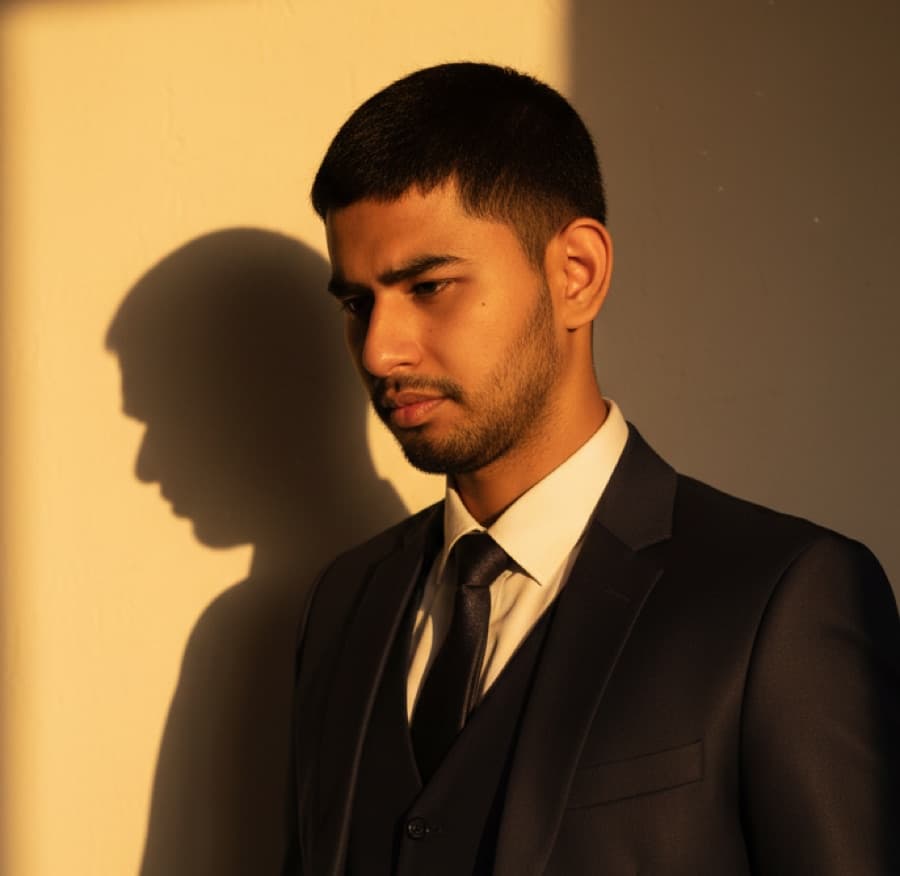
Muhammad Amirul
Software engineer & editor
Muhammad Amirul is a software engineer based in Bali, Indonesia. He has spent more than four years building scalable backends and full-stack products across Laravel, Node.js, and Next.js, and currently works as an IT Engineer at Bali Nexus Investments Partners. FORYOU is where he writes about the systems, places, and people he keeps noticing.
Three writers, three beats: AI and infrastructure, the day's world news, and life on the island.
CE
Celestia
Technology editor / The Stack
Celestia writes The Stack, a column about AI, robotics, and the silicon supply chain. She spent six years in infrastructure before deciding that the interesting part of a system is always the decision behind it.
EV
Evangeline
World news editor / Rank One Daily
Evangeline writes Rank One Daily, a morning brief that ranks the day's events by consequence instead of volume. She has reported from Jakarta, Singapore, and Doha, and still believes a good list is a form of editing.
SE
Seraphine
Bali correspondent / Bali Dispatch
Seraphine writes Bali Dispatch, a weekly letter about the island beyond the postcard: water, temples, traffic, and the people making a life here. She grew up in Singaraja and has watched the south change one villa at a time.
Read something that stays with you.
The journal is free, the archive is open, and there is no wrong place to start.